A press release distributed through ACCESS Newswire says recent research on the peptide Epitalon and telomere-maintenance mechanisms has renewed attention to the compound within cellular-aging science. The release comes from Epitalonn.com, an informational site built around the peptide, which is worth knowing before weighing how the findings are framed.
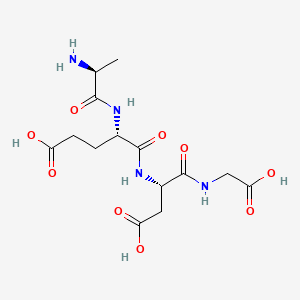
The work in question was done entirely in human cell lines, not people. Epitalon, also written Epithalon, is a synthetic four-amino-acid peptide with the sequence Ala-Glu-Asp-Gly, usually abbreviated AEDG, and it has been studied in laboratory models for more than two decades.
What the 2025 paper measured
A study published in Biogerontology in September 2025 by researchers from Brunel University London and the Royal Brompton Hospital examined Epitalon in normal epithelial cells, fibroblasts and breast cancer cell lines. The team measured telomere length, hTERT expression, telomerase enzyme activity and the alternative lengthening of telomeres pathway, known as ALT.
The study reported dose-dependent telomere-length increases in the normal cells, associated with increased hTERT expression and telomerase activity. Telomere-length increases were also observed in the cancer cell lines, though those were associated with activation of the ALT pathway, a detail the release does not dwell on and probably should.
Why telomeres keep coming up
Telomeres are protective structures at the ends of chromosomes that help maintain stability during cell division. In many somatic cells they shorten with each division, and when they get critically short the cell can stop dividing and enter senescence.
Telomerase can add DNA sequences back onto telomeres, but most normal human somatic cells have relatively low telomerase activity. That gap is why telomere attrition became a fixture of aging research in the first place.
The older experiments
The release also revisits early work: a 2003 report of telomerase induction and telomere elongation in telomerase-negative human fetal fibroblasts, and a 2004 follow-up in which untreated cells lost proliferative capacity at the 34th passage while Epitalon-treated cells reached 44 passages. Both were cell-culture experiments, and a separate study on lymphocytes from people aged 76 to 80 was also laboratory work.
Bottom line
The release itself states plainly that these findings do not show Epitalon extends human lifespan, reverses biological aging, or behaves the same way when given to people. That honesty is unusual in a newswire drop, and it is also the whole story: interesting mechanism, no human evidence, independent replication still needed.
Comments (0)
Discussion happens on Reddit.
Go to r/PeptideNewsroomQuestions and corrections go to r/PeptideNewsroom.