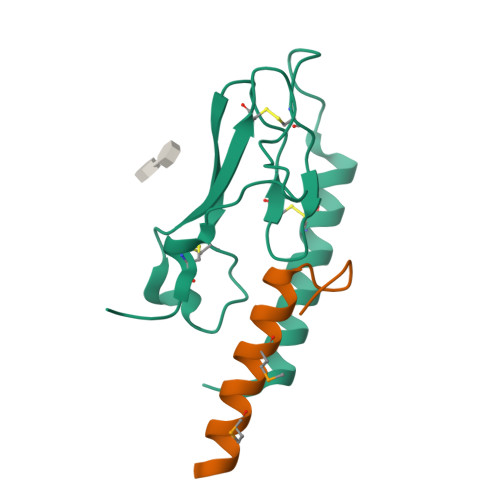
A scientific review of glucagon-like peptide 2 argues that the hormone's biology extends well beyond the gastrointestinal tract, while noting that most of the evidence outside the gut has not left the laboratory. The review, by Rui Shang and Daniel J. Drucker, appears in Nature Reviews Gastroenterology and Hepatology.
GLP-2 is a proglucagon-derived peptide secreted alongside GLP-1, the hormone behind semaglutide and tirzepatide, from intestinal endocrine L cells in response to food and inflammatory signals. Everything it does, inside the gut and out, runs through a single dedicated GLP-2 receptor, which is expressed both in intestinal tissue and elsewhere in the body.
What the gut receptor does
Activating the intestinal GLP-2 receptor stimulates mucosal growth, strengthens the epithelial barrier and increases nutrient absorption, according to the review. It also reduces local inflammation in gut tissue and helps suppress systemic inflammatory responses when intestinal homeostasis is disrupted.
That mechanism is already a drug. The GLP-2 analogue teduglutide has been used for more than a decade to treat short bowel syndrome, and the authors say longer-acting analogues have shown clinical efficacy in patients with parenteral nutrition-dependent intestinal failure.
Motility, gallbladder and bone
GLP-2 signaling inhibits gastrointestinal motility and slows gallbladder emptying, both documented physiological effects rather than inferred ones. Signaling through the receptor has also been shown to inhibit bone resorption, which is a long way from the intestine for a gut hormone.
Where the evidence stops
The cardioprotective, hepatoprotective and immunomodulatory effects the review describes come from controlled preclinical studies, not human trials. In people, the clinical data is observational: circulating GLP-2 levels correlate with the extent of tissue injury and sepsis during critical illness, which is a marker, not a treatment.
The central nervous system findings sit in the same category. Receptor activation in the brain has been reported to reduce appetite, inhibit gut motility and reduce neuroinflammation, with associations to improved glucose homeostasis and neuroprotection across neural tissues.
Bottom line
Teduglutide is the proof that this receptor can be drugged successfully, and it is also the only indication that has made it. Shang and Drucker are explicit that moving the protective observations into new clinical uses means addressing gaps and limitations in the existing evidence first.
Comments (0)
Discussion happens on Reddit.
Go to r/PeptideNewsroomQuestions and corrections go to r/PeptideNewsroom.