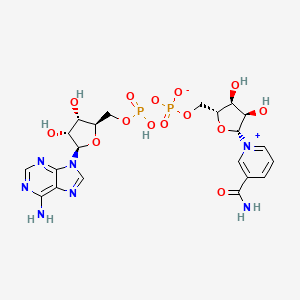
NAD+, or nicotinamide adenine dinucleotide, is a coenzyme involved in cellular metabolism that has become one of the most heavily marketed ingredients in the longevity category. It is sold as capsules and sublinguals, as the precursors nicotinamide riboside and nicotinamide mononucleotide, as clinic infusions, and now as something you stick under your eyes overnight.
The topical pitch
A New York Post commerce piece describes a bundle from Seald Wellness pairing forehead tape with NAD+ Peptide Eye Gel Patches for under $50, which the brand says is meant to deliver results without needles or downtime. The compound is characterized there as a longevity-focused ingredient known for its role in cellular energy production and DNA repair, and the only supporting material in the article is customer commentary. No study, no measurement, no named researcher.
Precursors and the supplement boom
The commercial picture is better documented than the biology. IndexBox forecasts 8.2% compound annual growth for the global NAD products market from 2026 to 2035, with its market index rising from 100 in 2025 to roughly 203 by 2035, and dietary supplements remaining the largest end-use segment. The same report notes that strategic success depends on substantiating product claims with rigorous clinical data, which is a polite way of saying the claims are currently ahead of the data.
NAD+ enters telehealth
Hims and Hers plans a November launch of peptide-based treatments starting with NAD+, sermorelin and glutathione, following relaxed US restrictions on compounding unapproved peptides. The report is explicit that the policy change involves enforcement discretion and does not constitute FDA approval or establish the safety and effectiveness of the substances, and the company's CFO said revenue from the category would be immaterial this year.
What Isn't Established
Not one of these three sources cites a clinical trial, an outcome figure, or a published result for NAD+ in any form. IndexBox flags formulation stability and skin penetration as unresolved problems for topical NAD+, and notes that regulatory status for NMN in the US and EU remains a key open variable.
Where the evidence stands
What exists publicly here is a market forecast, a product launch and a shopping column. That is a category with real commercial momentum and, in this material, no human efficacy data behind it.
Comments (0)
Discussion happens on Reddit.
Go to r/PeptideNewsroomQuestions and corrections go to r/PeptideNewsroom.