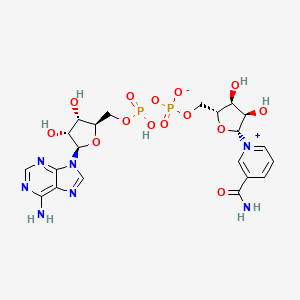
NAD+, or nicotinamide adenine dinucleotide, is a coenzyme found in every cell in the body, and it has become one of the anchor ingredients of the longevity market. It is sold two ways: as an intravenous infusion at wellness clinics, and as an oral precursor such as nicotinamide riboside. The gap between how confidently it is marketed and what has actually been published is the story here.
The IV clinic route
The most serious NAD+ story of the year is not a trial result. The New York City medical examiner's office ruled the death of 27-year-old Elizabeth Baron a homicide after an unlicensed practitioner introduced air into her IV catheter during an NAD+ infusion at a Bronx lifestyle center in July. The cause of death was cardiac air embolism, and the practitioner, Luis Rojas Cabrera, was charged with reckless endangerment and unauthorized practice of a profession. His attorney says a homicide ruling does not mean murder and that if it was a homicide it was an accident.
The detail worth holding onto is in the same report: Gothamist notes NAD+ is used in some anti-aging treatments despite limited studies on its safety and effectiveness. The delivery route carried the risk here, not the molecule, but the route exists because the molecule is being sold as rejuvenation.
The precursor route
On the supplement side, the category is being built on precursors rather than on infusions. A SupplySide Supply Side Journal healthy-aging package describes manufacturers developing what it calls clinically validated NAD+ precursors like nicotinamide riboside, alongside senolytic compounds such as fisetin and quercetin. That phrasing comes from the industry's own framing of its category, and the package's landmark trial example, the COSMOS study on multivitamins and biological aging, is not an NAD+ study.
What the dermatology desk is asking
The question is live among clinicians rather than settled. The Dermatology Digest has published a talk by Patricia K. Farris, MD, asking whether NAD+ precursors, creatine, urolithin A and spermidine are hope, hype or harm, framed explicitly as an evidence-based look at what is and is not known.
What Isn't Established
None of these three sources reports an NAD+ outcome figure, a trial size, a dose or a duration. No published human trial of NAD+ infusion or of any precursor is named in any of them. Safety and effectiveness are described as under-studied by one source and as an open question by another, and the only firm number attached to NAD+ in this material is a death certificate.
Where the evidence stands
What exists publicly right now is a category, not a conclusion. The industry is describing its own precursor ingredients as validated, a dermatology conference is still asking the hope-or-hype question out loud, and a regulator-free clinic channel has produced a homicide ruling. That is an unusually wide spread for a compound this heavily marketed.
Comments (0)
Discussion happens on Reddit.
Go to r/PeptideNewsroomQuestions and corrections go to r/PeptideNewsroom.