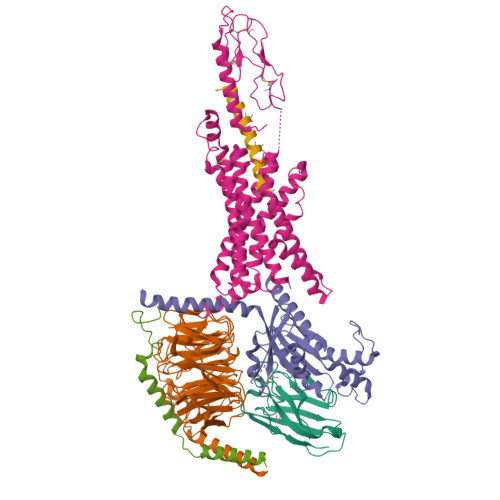
Retatrutide is an investigational drug from Eli Lilly that acts on three receptors at once: glucose-dependent insulinotropic polypeptide, glucagon-like peptide-1, and glucagon. It is not approved, and most of what is publicly circulating about it right now is demand rather than data.
What it is designed to hit
The three-receptor design is what separates it from the single-target GLP-1 drugs already on the market, according to a Q&A published by The American Journal of Managed Care with Rob Stransky, founder of the telehealth company NiceRx. That piece describes the compound as investigational, which is the detail most consumer coverage leaves out.
How many people are already using it
AJMC cites an October research letter in JAMA Network Open that analyzed Reddit posts from 13,589 users reporting current retatrutide use. The letter called for nonjudgmental screening for nonapproved peptide use, which tells you the authors considered this a population large enough for clinicians to plan around.
The muscle and bone claim
The loudest claim attached to retatrutide at the moment came from Joe Rogan, who said on his podcast that it lets people keep muscle mass and bone density while losing weight, as reported by BigGo Finance. That coverage flags the obvious problem itself: Rogan is a comedian, not a clinician, and no trial is cited anywhere in the piece to support the comparison.
The rest of the multi-receptor field
Retatrutide is not the only multi-receptor candidate moving. MetaVia announced that an abstract on DA-1726, a separate dual oxyntomodulin analogue targeting GLP-1 and glucagon receptors, was accepted for a poster presentation at ObesityWeek 2026.
What Isn't Established
None of these sources reports a published retatrutide trial result, a dose, or an efficacy figure. The body-composition claim has no study behind it in the material available, and the Reddit figure counts people posting about use, not outcomes measured by anyone.
Where the evidence stands
The cost pressure is real: Stransky told AJMC that cost is the single biggest driver of the gray market, and AJMC notes 14% of employers surveyed by the Business Group on Health have dropped or plan to drop GLP-1 weight-loss coverage in 2027. The use is running well ahead of the publicly available evidence, and that gap is the whole story for now.
Comments (0)
Discussion happens on Reddit.
Go to r/PeptideNewsroomQuestions and corrections go to r/PeptideNewsroom.