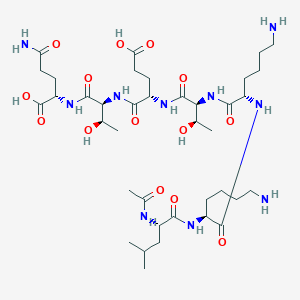
TB-500 is a synthetic peptide sold mostly online and, as of late October, newly tolerated in US compounding pharmacies. It is best known as half of the "Wolverine stack," the pairing with BPC-157 marketed to men who want faster healing and more muscle. What follows is what the current reporting actually establishes about it, which is less than the marketing implies.
The repair and recovery claim
The stack is pitched as a healing accelerator, and it is selling: Wonkette reports that use has increased 33-fold over the last six years, driven largely by manosphere podcasters. That piece is blunt about the underlying science, saying there is no evidence the stack does anything in human beings, and raising possible tumor growth as the one exception worth worrying about.
What the FDA reviewers found
On October 28, HHS released a notice signed by Robert F. Kennedy Jr. saying it does not intend to act against pharmacies, federal facilities or doctors that compound six unapproved peptides, TB-500 among them. Celine Gounder's reporting notes that the FDA's own drug reviewers recommended against listing all six, and that for TB-500 specifically the policy dismisses the reviewers' safety concerns as "inferential rather than observed." HHS told her the policy "does not grant FDA approval or establish clinical safety and effectiveness."
Other regulators are moving the other way
Israel's Health Ministry has warned the public against TB-500 alongside BPC-157, GHK-Cu, CJC-1295 and retatrutide, all marketed there for weight loss, bodybuilding, anti-aging and athletic performance without approval. The ministry says use of these substances from unsupervised sources may cause serious health damage, including liver and kidney damage, hormonal disorders and disrupted blood sugar.
What Isn't Established
None of these sources cites a single published human trial of TB-500, for healing, muscle growth or anything else. The HHS policy itself is not a safety finding, and the language it uses about TB-500 concedes that the concerns are unobserved rather than disproven. An absence of observed harm in a compound almost nobody has formally studied is not the same as a safety record.
Where this leaves the evidence
TB-500's regulatory position in the US has changed, and its evidence base has not. Easier legal access is a supply story, not a science story, and the two are being widely confused.
Comments (0)
Discussion happens on Reddit.
Go to r/PeptideNewsroomQuestions and corrections go to r/PeptideNewsroom.