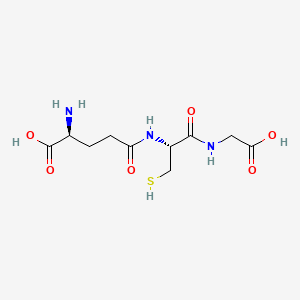
Glutathione is a non-protein tripeptide thiol, often marketed as the body's "master antioxidant," and it turns up across an unusually wide spread of research literature. The recent work is worth reading closely, because almost none of it is about people taking glutathione.
Browning in fresh-cut produce
The most direct application work is agricultural. A 2026 mini-review in Frontiers in Nutrition reports that a 1% exogenous glutathione dip delayed surface discoloration in fresh-cut lotus root slices during cold storage by suppressing browning-related enzyme activity, with a similar effect reported in fresh-cut wax apple fruit. The authors argue glutathione is not merely a passive reactive oxygen species scavenger but may act as what they call a homeostatic orchestrator, and they note that some of those mechanisms are inferred from model plants such as Arabidopsis rather than demonstrated in produce.
A trigger for peptide self-assembly
Glutathione also shows up as a tool rather than a treatment. A Nature Protocols workflow described by Scienmag uses glutathione, alongside the enzyme sulfatase, as one of two biological triggers that cause designed peptide building blocks to assemble inside living cells. The protocol covers murine macrophages, human cervical carcinoma cells, murine breast cancer cells and tumor-bearing mice, and the authors are explicit that it reports validated methods rather than new efficacy findings.
Glutathione metabolism in aging models
In a C. elegans study, a vinegar-derived compound called FG1 extended mean and maximum lifespan in nematodes, and transcriptomic analysis showed upregulation of genes associated with detoxification, glutathione metabolism and longevity-regulating pathways. The authors frame the longevity effect as associated with changes in antioxidant and detoxification responses, not caused by them.
Glutathione peroxidase as an outcome marker
In rats, glutathione peroxidase appears as a measurement rather than an intervention. A study of testicular ischemia-reperfusion injury in 50 Wistar rats found significantly increased GPx, SOD and total antioxidant status in animals given combined crocin and mesenchymal stem cells compared with untreated ischemic animals.
What Isn't Established
None of these four sources involves humans taking glutathione. The produce work is horticultural, the protocol paper reports methods and not outcomes, the longevity work is in nematodes, and the rat study measures a glutathione enzyme as a marker of something else entirely. No oral or injected human dose, route or outcome appears anywhere in this set.
Where the evidence stands
Glutathione is extremely well studied as a biochemical system and very thinly studied, in this batch of literature, as a human intervention. The interesting near-term work is the one treating it as a switch inside cells, and even that is a protocol waiting for results.
Comments (0)
Discussion happens on Reddit.
Go to r/PeptideNewsroomQuestions and corrections go to r/PeptideNewsroom.