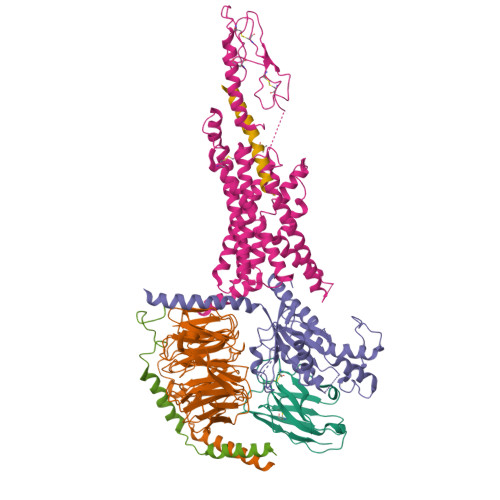
Tirzepatide is the injectable sold as Mounjaro for type 2 diabetes and as Zepbound for weight loss, and regulators group it with the GLP-1 receptor agonist class alongside semaglutide. Most of what reached the news cycle this month is about the class rather than tirzepatide alone, which is worth keeping straight before anything else.
Sleep apnea and the pill comparison
The clearest recent tirzepatide reference point comes indirectly. Eli Lilly's oral GLP-1 Foundayo helped alleviate sleep apnea in two late-stage studies but, STAT reported, does not appear as effective as the company's injectable Zepbound.
In a one-year trial of patients not receiving PAP therapy, those on Foundayo saw a reduction of 17.8 events per hour on the apnea-hypopnea index, compared with 4.5 events on placebo. Remission or mild disease was reached by 28 percent of treated patients versus 13 percent on placebo, data presented at the American Heart Association meeting and published in JAMA.
The new eye-risk labeling
The FDA is requiring GLP-1 drugs including Mounjaro and Zepbound to add information about a potential increased risk of non-arteritic anterior ischemic optic neuropathy, a common cause of sudden, painless vision loss. The agency said it evaluated clinical trial, animal and post-marketing data, and a Lilly spokesperson said the communication applies to all medicines with GLP-1 activity and does not reference findings specific to Lilly medicines.
The hard number behind the action is not a tirzepatide number. A 2025 study tracking nearly 175,000 diabetic patients on semaglutide against an equal number on non-GLP-1 medications found the risk of NAION more than doubled after two years.
Who is filling prescriptions after birth
A JAMA study described by PopSugar found that 1.9 percent of commercially insured women filled a new GLP-1 prescription within six months of giving birth in early 2025, up from 0.08 percent in early 2018. Study author Sih-Ting Cai said the data cannot say why, and the cohort excluded women on Medicaid and prescriptions paid entirely out of pocket.
What Isn't Established
The doubled NAION figure comes from semaglutide data, not tirzepatide, and Novo Nordisk said the data do not establish a cause-and-effect relationship. The postpartum prescribing study counted the whole GLP-1 class, did not ask women their reasons, and Christine Call said research on GLP-1s and postpartum body image has not caught up.
Where the evidence stands
Tirzepatide sits inside a class now carrying a new labeled warning and a growing body of trial data on conditions beyond weight and blood sugar. Much of the most specific recent evidence is about its neighbors, which is a reason to read class findings as class findings.
Comments (0)
Discussion happens on Reddit.
Go to r/PeptideNewsroomQuestions and corrections go to r/PeptideNewsroom.