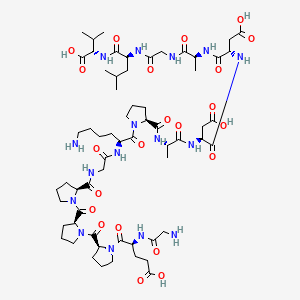
BPC-157 is a synthetic peptide, a short chain of amino acids, that circulates widely in the online wellness market as an injectable and now as a skin patch. It is not FDA approved, and the gap between how much is being sold and how much has been studied in people is the whole story here.
Anti-inflammatory signals in animal work
The research that exists is preclinical. BPC-157 has shown anti-inflammatory potential in some animal and lab research, according to Dr. Pieter Cohen of Harvard Medical School and Cambridge Health Alliance, who notes that attention has focused on injectable peptides like BPC-157 and GHK-Cu that carry no FDA approval.
That is a narrow claim, and it is the strongest one anybody quoted in this coverage makes.
On the FDA's risk list
The FDA maintains a list of injectables that "may present significant safety risks," and BPC-157 is on it. Epidemiologist and physician Dr. Caleb Alexander of the Johns Hopkins Bloomberg School of Public Health said one of the main reasons is "the absence of evidence," pointing to the lack of rigorous human trials on safety and effectiveness.
Sold as research material only
On the supply side, the framing is explicitly non-clinical. Umbrella Labs announced a documentation and traceability update for BPC-157 reference material supplied strictly for laboratory developmental research use only, and said the update does not change that designation or convert the release into a biological-outcome statement.
A consumer patch is already on sale
That research-only language is not how every seller operates. The Precision Peptide Company said it has secured exclusive manufacturing rights to four transdermal patch formulations including BPC-157, which it says has completed formulation, U.S. testing, commercial production and release, and is sold direct to consumers in all 50 states.
What Isn't Established
There has been no large-scale human research assessing the safety or effectiveness of BPC-157, per the same reporting that describes its animal-model anti-inflammatory signal. Dermatologist Dr. Alison Dempsey of Weill Cornell Medicine put the imbalance plainly: "when it comes to peptides marketing, word of mouth has strongly surpassed where we are with any type of research."
Cohen also warns that gray-market and social-media purchases can mean the wrong compound, the wrong dose, or contamination with bacteria or other problematic substances.
Where the evidence stands
For BPC-157 the published picture is preclinical, and the commercial picture is retail. Reporting indicates Health and Human Services may permit compounding of certain synthetic peptides through an interim access mechanism, which would put that mismatch in front of regulators rather than resolving it.
Comments (0)
Discussion happens on Reddit.
Go to r/PeptideNewsroomQuestions and corrections go to r/PeptideNewsroom.