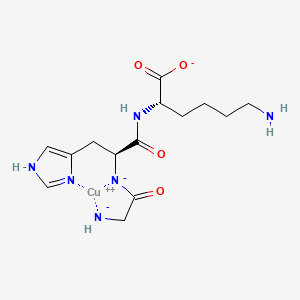
GHK-Cu is a small copper-binding peptide: the tripeptide glycine-histidine-lysine joined to a copper ion. It has been circulating in peptide research and peptide retail for decades, which makes it a useful test of how much of the available writing on a compound is actually evidence.
Where the biology claims come from
The most detailed public summary of the compound is a sponsored overview published by Daily Leader, which describes GHK-Cu as a signaling molecule with a broad range of theorized biological properties. Almost every claim in it is hedged as theorized, proposed or suggested, and that hedging is worth preserving rather than flattening.
The piece says copper functions as a cofactor for enzymes involved in antioxidant activity, energy metabolism and connective tissue organization, and that GHK's high-affinity copper binding has led researchers to theorize the peptide may influence local copper availability. That is a mechanism hypothesis, not a measured outcome.
Gene expression and the matrix
The same overview reports that transcriptomic analyses have suggested the peptide may influence expression patterns across a substantial number of genes tied to cellular maintenance, structural organization and inflammatory signaling, with both upregulation and downregulation involved. No gene count, effect size or study design is given.
Its cited literature is telling about the model systems: a 1988 FEBS Letters paper on collagen synthesis in fibroblast cultures, and a 2003 Veterinary Surgery study of a topical tripeptide-copper complex on ischemic open wounds in animals. Cell culture and veterinary wound work, not human trials.
The supply side moves faster than the data
Commercial activity is not waiting for that gap to close. Nox Peptides announced in October 2026 that it was adding GHK-Cu as a standalone research product for the Canadian market, stating the material is for laboratory and preclinical use and is not marketed as a medication.
What a vial costs, and what the paperwork says
Pricing sits in supplement territory. A paid advertorial review of supplier Synthesis Peptides recorded a GHK-Cu listing advertised at $36.99 per unit on October 3, 2026, with 5%, 15% and 20% discounts at 3, 5 and 10 units, all per the brand.
That review also read one certificate of analysis, for lot GHK50626, printing 99.678% batch-average purity and 49.30 mg net content against a labeled 50 mg. The reviewer did not authenticate the certificate with its named issuing laboratory and did not establish that laboratory's accreditation.
What Isn't Established
None of these three sources cites a human clinical trial of GHK-Cu. The biology coverage is hedged throughout and leans on cell culture and animal wound work from 1988 to 2018, the supplier announcement makes no efficacy claim at all, and the pricing review explicitly tested nothing and authenticated nothing.
The overview notes that naturally occurring GHK levels may decline over time and calls that a prompt for questions, not an answer. It also concedes that the peptide's molecular targets and broader physiological significance remain incompletely understood after decades of attention.
Where the evidence stands
GHK-Cu has an unusually long research history and an unusually thin public record of controlled human results, and the gap between those two facts is the whole story. Right now the most verifiable numbers attached to this compound are a price and a purity percentage, and only one of those was checked by anybody.
Comments (0)
Discussion happens on Reddit.
Go to r/PeptideNewsroomQuestions and corrections go to r/PeptideNewsroom.