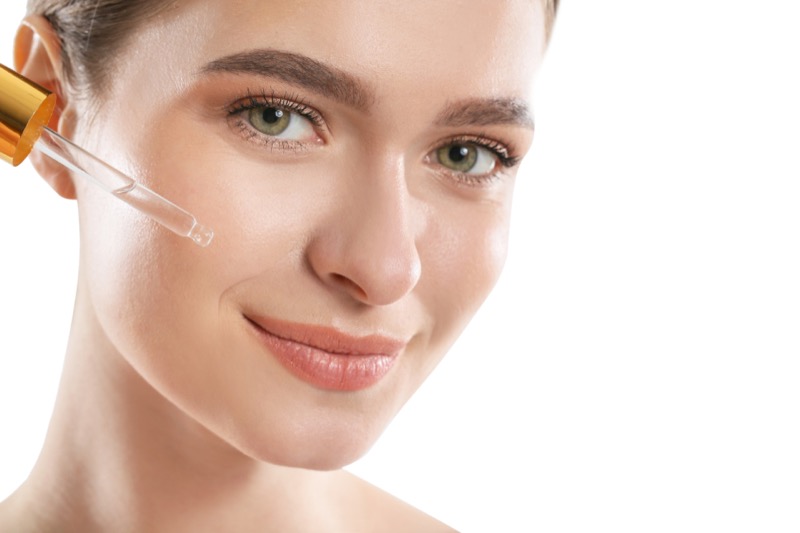
A shopping feature published by E Online reports that NAD+ has become the latest buzzed-about skincare ingredient, with several brands launching serums, creams and essences built around it. Activewear brand Alo recently launched NAD+ eye patches, which the brand says support the skin's moisture barrier.
NAD+ is short for nicotinamide adenine dinucleotide, and E Online notes that readers may recognize the term from celebrities receiving IV infusions containing the ingredient. The ingredient has now moved from infusions into topical skincare, according to the feature.
What the ingredient is supposed to do
Experts referenced in the piece say NAD+ is touted for cellular repair, reducing inflammation and firming skin, among other anti-aging benefits. The framing is the familiar one: like collagen, NAD+ levels decline as a person ages, which the outlet says is why the industry is exploring how those levels can be replenished.
What is actually on the shelf
The roundup names Numbuzin No.9 NAD+ BIO Lifting-Sil Essence, which E Online says combines NAD+ with peptides, alongside Medicube NAD+ EGF Firming Serum and Arencia NAD+ Booster Shot Cream. Alo Bio NAD+ Recovery Eye Masks are listed at $55, with the outlet noting that pricing and availability were accurate as of publication.
The peptides sitting next to it
Peptide products appear in the same roundup, including a copper peptide and bakuchiol serum that the outlet says promises to help improve fine lines, support elasticity and replenish moisture. Those are product claims, and no published studies are cited behind them.
Limitations
This is a shopping roundup, not a review of clinical evidence, and it names no published trial, sample size or measured result for NAD+ applied to skin. The experts it refers to are not named or quoted directly, and E Online says its editors select products based on research, reporting and reader interest.
Bottom line
The feature predicts it is only a matter of time until NAD+ is everywhere in skincare, and on current momentum that looks like a safe call. The unsettled part is the part that matters: with the claims attributed to brands and to unnamed experts, what topical NAD+ has been shown to do is still an open question, and a launch calendar is not an answer to it.
Comments (0)
Discussion happens on Reddit.
Go to r/PeptideNewsroomQuestions and corrections go to r/PeptideNewsroom.