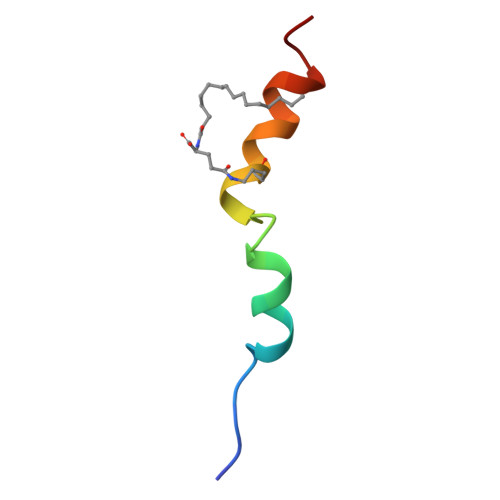
A study published in Food Research International describes an oral delivery system that pairs a rapeseed protein-derived DPP-IV inhibitory peptide with liraglutide on a self-propelled nanoparticle, and reports improved glucose tolerance in a type 2 diabetes mouse model.
The work was carried out in cultured cells and in mice, and no human testing is described. The two cargoes are IPQVS, a peptide derived from rapeseed protein that inhibits DPP-IV, the enzyme that breaks down the body's own incretin hormones, and liraglutide, a GLP-1 receptor agonist normally given by injection.
Why oral peptides are hard
The researchers frame the problem as a choice between bad options: injectables act fast but long-term use may carry safety risks such as hypoglycemia, while oral drugs like metformin bring side effects and drug resistance. Peptides taken by mouth face a more basic obstacle, which is that stomach acid degrades them before they reach the intestine.
The team's answer was a Janus nanomotor built on mesoporous silica nanoparticles, measuring 174.69 plus or minus 10.5 nm, packed inside sodium alginate hydrogel microspheres to shield both cargoes from gastric acid.
Key results
The propulsion is the eye-catching part. Under 250 micromolar hydrogen peroxide stimulation the nanomotors reached 21.87 micrometers per second, which the authors put at 7.3 times faster than passive diffusion.
In intestinal epithelial cells, uptake was 4.17 times higher than for passive nanoparticles, and insulin secretion was 1.81 times higher. The system scavenged intracellular reactive oxygen species at a reported rate of 89.74 percent and restored mitochondrial membrane potential to 71.5 percent of control levels. Under hyperglycemic conditions, survival of damaged pancreatic beta cells was restored to 84 percent.
In the mouse model, the area under the oral glucose tolerance test curve fell to 52.25 percent of diabetic controls, which the authors describe as a significant improvement in glucose tolerance alongside alleviated insulin resistance.
Limitations
Everything here is preclinical. The results come from cell culture and a single rodent diabetes model, with no placebo-controlled human data and no reported safety or toxicity work on the silica carrier or its hydrogen peroxide fuel dependence. The abstract also does not state how many animals were used, which makes the mouse figures hard to weigh.
Bottom line
The authors position this as a multifunctional nano-system combining autonomous mobility, targeted delivery and gastrointestinal protection. Whether any of that survives the jump out of a mouse is the question the paper does not answer, and oral peptide delivery has a long history of impressive rodent data that stops there.
Comments (0)
Discussion happens on Reddit.
Go to r/PeptideNewsroomQuestions and corrections go to r/PeptideNewsroom.