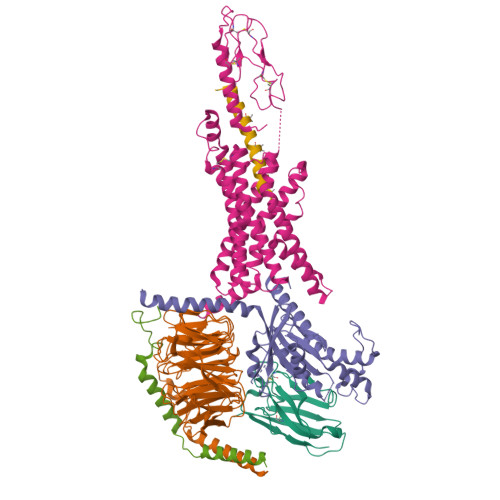
Retatrutide is an investigational injectable from Eli Lilly that acts on three receptors at once: GLP-1, GIP and glucagon. The first two are the targets behind semaglutide and tirzepatide. The third is what makes it new, and it is currently in phase 3 trials with no FDA approval.
The triple agonist argument
Holly Lofton, MD, director of the medical weight management program at NYU Langone Health and a principal investigator on a retatrutide trial, told Women's Health that adding glucagon agonism produces greater delay in gastric emptying and improved fat-cell metabolism compared with tirzepatide's GLP-1 and GIP combination. Jennifer Manne-Goehler, MD, of Harvard Medical School, told the same outlet that despite the third receptor, the effect on glucose levels in people with type 2 diabetes appears similar to existing GLP-1 medications. The separation shows up in weight, not blood sugar.
How much weight, over how long
Lofton put the figure at about 28 percent of body weight over two years, compared with about 10 percent for GLP-1s, which she described as comparable to bariatric surgery. She also made the point that the magnitude is the reason this is not a cosmetic drug but one aimed at clinical obesity. That is a useful caveat and it is coming from someone running the trials, not from the marketing.
The signals investigators are watching
Both experts said retatrutide so far appears similarly safe to other GLP-1 medicines, with gastrointestinal symptoms the most common adverse events in leading trials. Lofton flagged three things she is watching: muscle and bone density loss accompanying rapid weight loss, gallstone risk, and a heart rate increase seen in phase 2 that was minor and subsided after peaking around 24 weeks. She also noted dysesthesia, or altered skin sensation, reported as mild to moderate in phase 3 and typically resolving during treatment, which she said she wants to understand better with longer follow-up.
What an unverified version looked like in a hospital
A case report in BMJ Case Reports describes a woman in her mid-20s admitted with five days of persistent nausea, repeated vomiting and loose stools that did not respond to intravenous fluids, metoclopramide, ondansetron or domperidone. Imaging and bloods found no alternative cause. Repeated history-taking eventually surfaced four once-weekly, dose-escalated subcutaneous injections of an unverified product reported to contain retatrutide, given in a wellness setting by a self-described life coach with no medical qualification.
The patient did not consider the injections to be medication. The authors scored causality as probable on the Naranjo scale, at 7, and recommended that clinicians ask explicitly about injections, peptides and research chemicals.
What Isn't Established
No regulator has approved retatrutide for anything. Phase 3, which compares it against semaglutide and tirzepatide, had not concluded at the time of the Women's Health report, so the head-to-head results are not public. The composition of the weight lost, specifically how much is muscle or bone, is an open question Lofton raised rather than one the published data answers. The heart rate and dysesthesia signals have short follow-up. And the BMJ report describes a single patient taking a product only reported to contain retatrutide, with no analysis confirming what was in the vial.
Where the evidence stands
This is a compound with impressive trial numbers, an incomplete phase 3, and a gray market already selling something with its name on it. Lofton said she has had reports of patients taking gray market reta with no weight loss at all, which she attributed to products often containing no active ingredient. Two very different bodies of evidence are accumulating here, and only one of them is a trial.
Comments (0)
Discussion happens on Reddit.
Go to r/PeptideNewsroomQuestions and corrections go to r/PeptideNewsroom.