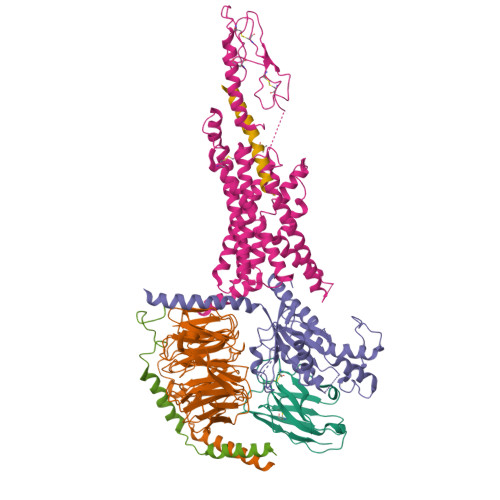
Tirzepatide is a synthetic peptide and a dual GIP/GLP-1 receptor agonist, indicated for chronic weight management and given as a once-weekly subcutaneous injection that needs refrigerated storage at 2 to 8 degrees Celsius. It is one of the most commercially successful peptides ever made, and most of the open research questions now sit around it rather than in it: what happens when people stop, and whether the needle is negotiable.
Weight regain after stopping
The most concrete recent data point comes from Fractyl Health, which reported six-month topline results from the REMAIN-1 pivotal cohort, a randomized, double-blind, sham-controlled study of its Revita duodenal ablation device in adults with obesity after tirzepatide-induced weight loss. In the modified intention-to-treat population of 308 participants, the company says Revita participants maintained roughly 80% of their GLP-1-induced weight loss at six months versus 67% for sham, with least-squares mean regain of 5.1% versus 8.2%.
The company also reports that 32% of Revita participants were weight stable or lost further weight at six months, against 18% for sham. That figure is post hoc with a nominal p-value, as is the ablation-length analysis showing 3.8% mean regain for 20 cm or greater ablation versus 8.2% for sham. Post hoc is not the same as prespecified, and the distinction matters more here than the percentages do.
Device tolerability so far
As of the 24 September 2026 data cut-off, Fractyl says Revita was generally well tolerated with no device- or procedure-related serious adverse events. Revita holds FDA Breakthrough Device designation, with a De Novo marketing application planned for late Q4 2026 and 12-month topline data anticipated in Q1 2027.
Needle-free delivery
The other active line of work is delivery format. The Precision Peptide Company announced that its needle-free tirzepatide transdermal patch has advanced into formal U.S. testing, designed to deliver tirzepatide without a needle and without refrigeration. The company cites needle fear affecting an estimated 20 to 30% of young adults and significant discontinuation of injectable GLP-1 therapy within the first year as its rationale, and says it believes a simpler format could support broader adoption.
Worth noting what that announcement is: a company statement about entering testing, not results from testing. The same release reports Gallup finding roughly 11% of U.S. adults using a GLP-1 medication as of mid-2026, nearly quadruple the 2024 rate, which explains the commercial pressure behind the format race.
What Isn't Established
No published peer-reviewed data accompanies either item. Fractyl's figures are company-reported topline results from an ongoing study, with the headline secondary findings labeled post hoc, and 12-month outcomes do not exist yet. The patch has produced no efficacy, pharmacokinetic or safety data at all, and the company itself cautions there is no assurance it will reach market first or at all.
Neither source says anything about whether a transdermal route can deliver a peptide of tirzepatide's size at therapeutic levels. That is the question the testing program exists to answer, and it is unanswered.
Where the evidence stands
Tirzepatide itself is heavily studied as an injectable; the surrounding questions are not. Post-discontinuation weight regain now has one sham-controlled pivotal cohort reporting at six months, and needle-free delivery has a press release about entering testing. Those are very different tiers of evidence, and the gap between them is the honest summary of this field right now.
Comments (0)
Discussion happens on Reddit.
Go to r/PeptideNewsroomQuestions and corrections go to r/PeptideNewsroom.