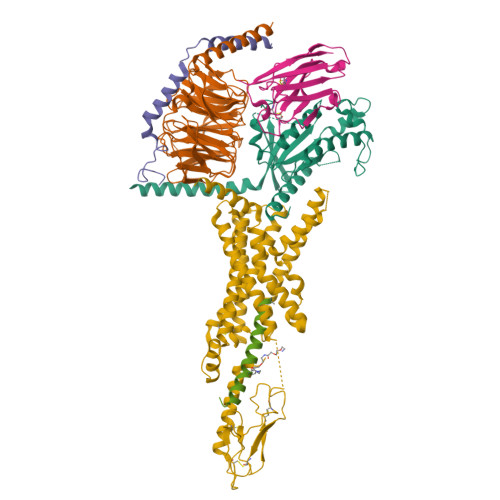
Semaglutide is a GLP-1 receptor agonist, sold as Ozempic and Wegovy, used in the treatment of type 2 diabetes and obesity. Much of the most recent published work on it is not clinical: the three studies summarized below were carried out in mice or in the laboratory, and none of them reports a human outcome. Each section names what was studied and what the researchers reported.
Effects on hunger neurons in mice
A Yale team reported in PNAS that agouti-related peptide (AgRP) neurons, long viewed as opponents of weight loss, appear to be activated rather than suppressed during semaglutide treatment in mice. In animals genetically engineered to lack AgRP neurons, the researchers said GLP-1 drugs were no longer able to sustain weight loss. The first author said the finding changes how researchers think about the mechanism involved, and the authors note the experiments were conducted in mice, so further research is needed to determine whether the same mechanism operates in humans.
Combination with an experimental metabolic compound
Researchers at UC Berkeley tested an older compound called TOFA alongside GLP-1 drugs including semaglutide in obese mice. They reported that TOFA alone increased energy use by as much as 18% and reduced body fat without significant loss of lean muscle mass, and that combining it with the GLP-1 drugs produced larger improvements in body weight, glucose control, insulin levels and triglycerides than either treatment alone. The senior author described TOFA as complementary rather than a replacement, and the team emphasized that it has so far been studied only in animals.
Redesigning the peptide scaffold
A laboratory study in the Journal of Enzyme Inhibition and Medicinal Chemistry used a short semaglutide-derived segment as the basis for building stabilized peptide scaffolds. The authors designed 108 stapled peptide candidates, synthesized and characterized 35, and reported that most stapled analogues showed improved serum and proteolytic stability relative to semaglutide, with three candidates showing the most favorable stability profiles.
What Isn't Established
None of these three studies involved human participants. The AgRP mechanism has not been shown to operate in people, TOFA's safety and effectiveness in humans remain unknown, and the stapled analogues were assessed for stability and modeled receptor interactions rather than tested for effects in animals or patients. No source here reports how any of this would change clinical use of semaglutide.
The state of the evidence
Semaglutide itself is an approved and widely used drug, but this recent research is at an earlier stage: one mouse mechanism study, one mouse combination study, and one synthetic chemistry paper. Each set of authors separately described further work as necessary.
Comments (0)
Discussion happens on Reddit.
Go to r/PeptideNewsroomQuestions and corrections go to r/PeptideNewsroom.