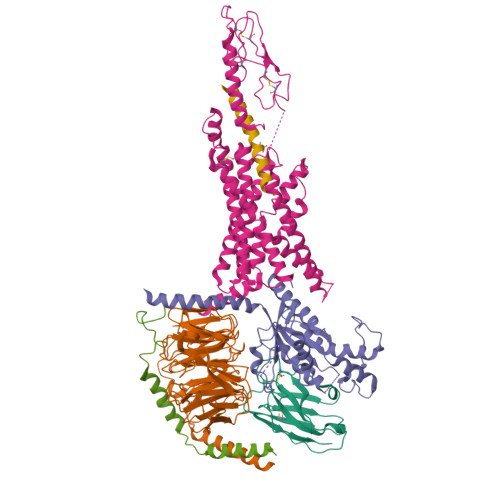
Tirzepatide is a dual GIP and GLP-1 receptor agonist sold as Mounjaro and Zepbound, prescribed for type 2 diabetes and obesity. It sits in the same broad drug class as semaglutide, and most of the large outcome data covering it treats that whole class as one group, which shapes what can and cannot be said about tirzepatide specifically.
Cardiovascular events and stopping treatment
Researchers at Washington University School of Medicine in St. Louis tracked 333,687 U.S. veterans with type 2 diabetes for up to three years and reported that participants who stayed on GLP-1 therapy throughout had an 18% lower risk of major adverse cardiovascular events than those prescribed sulfonylureas, about four fewer events per 100 people over three years. Of the 132,551 GLP-1 users in the cohort, 26% stopped entirely and roughly 23% had a gap of at least six months.
The discontinuation findings are the part worth sitting with. Published in BMJ Medicine, the analysis found gaps of six months were associated with a 4% to 8% increase in cardiovascular risk versus continuous use, rising to 14% after a year off and up to 22% after two. Senior author Ziyad Al-Aly said restarting restored some protection but only partially.
Oral and periodontal outcomes
A propensity score-matched cohort study in Diabetes Research and Clinical Practice, using the TriNetX Global Collaborative Network, compared 97,993 tirzepatide patients with an equal number on other GLP-1 receptor agonists over one year. Tirzepatide was associated with lower risks of periodontitis (HR 0.70), peri-implant complications (HR 0.61), and oral or maxillofacial infections (HR 0.70), with a composite oral outcome hazard ratio of 0.87.
What Isn't Established
Both studies are retrospective and observational, and neither demonstrates cause. The cardiovascular work pooled tirzepatide with semaglutide under one GLP-1 label, so it does not isolate tirzepatide's own effect, and the veteran cohort is not a general population. The dental study's authors note low recorded event rates and the limits of electronic health record data, and call for prospective studies with systematic dental assessments before the associations are treated as settled.
Where the evidence stands
Tirzepatide has very large observational datasets behind it and almost no long-term randomized outcome data of its own outside the trials that won approval. That is a different evidence profile from most compounds this site covers, and the gap between database size and trial depth is the thing to watch.
Comments (0)
Discussion happens on Reddit.
Go to r/PeptideNewsroomQuestions and corrections go to r/PeptideNewsroom.