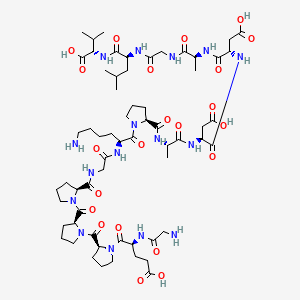
BPC-157 is a synthetic 15-amino-acid peptide, nicknamed the "Wolverine" peptide, sold online for wellness and injected by people hoping to speed up injury recovery. It is one of the most talked-about compounds in the field and one of the least studied in humans, which is an unusual combination and worth laying out claim by claim.
Who is using it, and what they report
A September 2026 preprint analyzed more than 15 million medical records and identified 1,039 people with documented BPC-157 use, with researchers finding a roughly 33-fold increase in new users between 2020 and 2026. Nearly 33% of those patients reported using it for pain relief against 4% for performance enhancement, and 27% of the full cohort reported improvements, with pain relief documented in 183 patients, wound or tissue healing in 38, and functional return in 34.
Where the human studies stop
A 2025 systematic review of the BPC-157 literature found it dominated by preclinical research and low-grade human evidence, with insufficient clinical safety data to determine the peptide's risks. The named human work is strikingly small: a 2021 retrospective study on injectable BPC-157 and knee pain followed 16 participants with no control group and no assessment of function or quality of life, and a 2025 intravenous safety pilot involved two people, whose researchers said larger studies are needed to confirm safety.
Still sold as a research material
Suppliers continue to frame the compound in laboratory terms. Nox Peptides, a Canadian research supply company, said in October that its expanded focus on BPC-157 covers preclinical and laboratory research only, that its products are not intended for human consumption, and that animal and laboratory work should not be read as evidence of an approved medical use.
Demand running ahead of oversight
That gap between consumer demand and clinical infrastructure is the subject of a Longevity.Technology discussion with Dr. Fady Hannah-Shmouni and Koehl Robinson, which places BPC-157 at the far end of the evidence spectrum from GLP-1 drugs, with far more limited human data. They describe a gray market in which sourcing, testing and clinical oversight vary significantly between products.
What Isn't Established
Safety is the big one. The FDA says it has limited safety information on how peptides like BPC-157 are administered, and notes free-base formulations may be sensitive to processing, environment and impurities. The preprint's lead author, Venky Soundararajan, said his study could not estimate incidence or overall safety because adverse events came from routine clinical notes and are likely underreported, flagging mood, sleep, skin, injection-site and gastrointestinal symptoms as outcomes deserving prospective measurement. Sports medicine specialist Bert Mandelbaum put it more bluntly: "There is zero indication that BPC-157 has any efficacy for pain." The compound is banned by the World Anti-Doping Agency as an unapproved substance.
The state of the evidence
A July 2026 FDA advisory panel voted 8-6, with one abstention, to add BPC-157 to the Section 503A bulk substances list, making it eligible for pharmacy compounding. That is not approval, the compound is not part of any approved product, and final regulatory decisions on peptides have not been made. The use data is now better than the outcome data, which is an odd place for a compound this popular to be.
Comments (0)
Discussion happens on Reddit.
Go to r/PeptideNewsroomQuestions and corrections go to r/PeptideNewsroom.