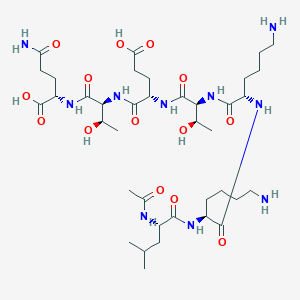
TB-500 is a synthetic seven-amino-acid peptide, sequence LKKTETQ with an acetyl group at one end, matching amino acids 17 through 23 of thymosin beta-4. It is one of the most heavily marketed repair peptides online, and it is also one of the least directly studied, which is an unusual combination worth unpacking.
Not the same thing as thymosin beta-4
The single most important fact about TB-500 is a definitional one: FDA's briefing document states directly that TB-500 and thymosin beta-4 are different substances, according to a comparison of the two compounds, right after noting that many websites use the names interchangeably. Thymosin beta-4 is a 43-amino-acid protein with decades of study and human clinical trials behind it. TB-500 is a short piece of it, and the acetyl group changes its charge, its size, and how it binds.
Cell migration and the actin hypothesis
The proposed mechanism runs through actin. The LKKTET segment binds G-actin, the building block cells use to form the filaments that let them change shape and move, which is what associates TB-500 with cell migration, angiogenesis, and tissue remodeling.
Wound healing in cultured cells
A 2024 laboratory study cited by FDA found that TB-500 itself produced no significant wound closure in scratched fibroblast cultures, though one of its breakdown products did. That is a specific and awkward result for a compound sold on wound repair, and it is the kind of finding that rarely makes it onto a product page.
What Isn't Established
FDA found no published study in which TB-500 was administered to humans, and its adverse event search through March 2025 returned zero reports, which reflects absence of exposure data rather than a clean safety record. There is almost no tendon-specific literature for TB-500, and no established dose-response relationship, even in rodents. Public certificates of analysis, FDA flagged, skip testing for impurities, aggregates, and bacterial endotoxin. A separate review notes that products sold for research use are not authorized for human treatment regardless of how they are marketed.
Where the evidence stands
TB-500 brings a mechanistic hypothesis, animal and cell data, and no human studies. The World Anti-Doping Agency prohibits it under S2.3, and a July 2026 FDA advisory committee vote of 8-6 recommending it for the 503A Bulks List is advisory only, with formal rulemaking still required.
Comments (0)
Discussion happens on Reddit.
Go to r/PeptideNewsroomQuestions and corrections go to r/PeptideNewsroom.