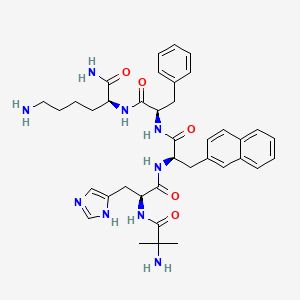
Ipamorelin is a synthetic growth hormone secretagogue, a small peptide described in the research literature as binding the growth hormone secretagogue receptor, also known as the ghrelin receptor. It appears most often in write-ups not on its own but as one third of a blend with Fragment 176-191 and Modified GRF 1-29, which is where almost all of the current consumer-facing coverage sits.
Receptor selectivity
The most consistently repeated claim is about specificity. One sponsored-content overview describes ipamorelin as theorized to display considerable selectivity toward the ghrelin receptor compared with earlier secretagogues, and frames that selectivity as useful because it may let researchers examine growth hormone signaling with fewer overlapping endocrine variables. Note the verb chain: theorized, may allow. That is the strongest language the source itself uses.
Why it is paired with GHRH analogs
The rationale for the three-peptide blend is complementarity rather than addition. A second sponsored piece sets out the division of labor: Fragment 176-191 draws metabolic research interest, Mod GRF 1-29 is investigated for its influence on endogenous hypothalamic-pituitary communication, and ipamorelin engages ghrelin receptor signaling. Two receptor systems, partially independent pathways, one experimental framework. As a design argument it is coherent. As evidence it is a hypothesis.
The metabolic framing
Both write-ups extend the discussion into lipid metabolism, mitochondrial dynamics, extracellular matrix remodeling and metabolic flexibility. In every case the connection is stated as something researchers have attracted attention to or may examine, not something anyone measured in a reported experiment.
What Isn't Established
Almost everything. Neither source reports a trial, a cohort, a dose, a duration or an outcome figure for ipamorelin alone or in the blend. Neither names a study of the combination itself. Both are labeled sponsored content, both close by pointing readers toward a vendor, and the citations they carry are general endocrinology reviews on GHRH and ghrelin receptor biology, not tests of this compound. There is no human efficacy claim here to evaluate, because none was made.
Where the evidence stands
The receptor pharmacology of growth hormone secretagogues is old, established science. The leap from that pharmacology to a three-peptide blend sold as a research strategy is currently marketing, not data, and the sources making the leap say so themselves if you read their verbs.
Comments (0)
Discussion happens on Reddit.
Go to r/PeptideNewsroomQuestions and corrections go to r/PeptideNewsroom.