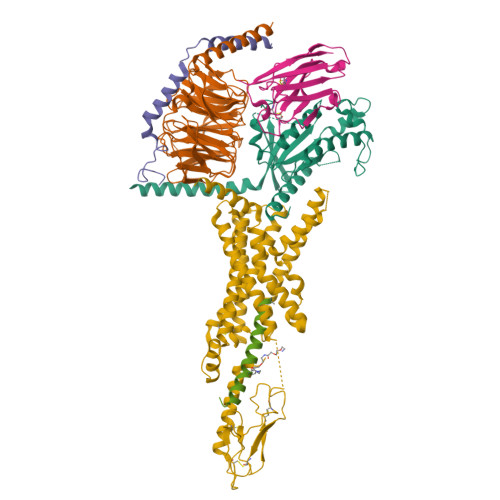
Semaglutide is a GLP-1 receptor agonist, a peptide drug sold as Ozempic for type 2 diabetes and as Wegovy for weight management. It is one of the few compounds in the peptide conversation with large randomized trial data behind it, which makes it a useful yardstick for everything else being sold under the same word.
Weight loss and knee osteoarthritis
A 2024 New England Journal of Medicine study in people with obesity and painful knee osteoarthritis, described by sports medicine physician Jordan Metzl, reported that participants taking semaglutide for 68 weeks lost an average of 13.7 percent of their body weight against 3.2 percent on placebo. The same participants reported substantially less knee pain and improved physical function.
Switching from injection to pill
The OCTANE analysis, presented at the 2026 EASD meeting in Milan, followed 194 adults who moved from injectable semaglutide or tirzepatide to oral semaglutide and recorded an average further loss of 4.1 percent of body weight, or 8.8 pounds, over three months. Two in five lost 5 percent or more, though the authors note this was retrospective and does not show the switch caused the loss.
Dose increase versus drug switch
A claims analysis of 636,525 adults with type 2 diabetes, also presented at EASD 2026, compared 185,705 people who raised their semaglutide dose to 2 mg with 23,104 who switched to tirzepatide. The dose-increase group showed a 6 percent lower risk of major adverse cardiovascular events, an association rather than a causal finding, and one the researchers did not explain.
Slowed digestion and anesthesia
A study in the journal Anaesthesia covering more than 47,000 UK surgical patients, reported by RNZ, found the roughly 1,350 patients on GLP-1 drugs were 11 times more likely to regurgitate or aspirate under general anesthetic. The authors said the link was not necessarily causal, since obesity and diabetes already raise that risk.
What Isn't Established
Two of these four findings were conference presentations not yet published in a peer-reviewed journal, and both were observational. Nobody has established how long slowed gastric emptying persists after stopping the drug, which is why Professor Michael Horowitz called the common one-week pause advice "demonstrably stupid" and called for more research.
Where the evidence stands
Semaglutide sits at the well-studied end of the peptide field, with randomized trial data most marketed peptides cannot match. The newer questions, oral versus injectable, dose versus switch, and perioperative safety, rest on real-world data that the researchers themselves describe as associations.
Comments (0)
Discussion happens on Reddit.
Go to r/PeptideNewsroomQuestions and corrections go to r/PeptideNewsroom.